Seolit
  • Home
    • Best Website Optimization Tips
  • Website
    • Charity
    • Choosing the right CMS
    • Choosing a good domain name
    • Examples
    • Weebly Optimization Tips >
      • Collapsible Content
      • Weebly Widgets and Apps
    • Why Bad Links Matter
  • Marketing
    • Online Scams
    • Affiliate Marketing
    • PPC Campaigns
  • Consultant
    • Keywords
    • Link Building
    • SSL Certificates
    • Voice Search
  • Prices
  • FAQs
  • Contact
  • Blog

WEBSITE OPTIMISATION EXAMPLES

The examples on this page show a selection of websites I have helped optimise across different industries, each with its own goals, audience, and level of competition. From local service businesses to specialist niche websites, every project demonstrates how thoughtful SEO, strong content, and practical website improvements can increase visibility and bring in more relevant traffic.

​These case studies are not just about rankings; they are about building websites that perform well, attract the right visitors, and support real business growth. I hope they give you a clearer idea of the kind of results that can be achieved with the right SEO approach.

Transport Industry

The transport industry can be difficult to optimise for because it is both location-led and service-led at the same time. A business may offer the same core service across multiple areas, but the search intent can change depending on whether the customer is looking for a local journey, an airport transfer, a private hire service, or a premium chauffeur experience.
​
This creates a real SEO challenge, because one page rarely covers all search intent (keywords) properly. For example, a transport company may want to rank for searches in London, Heathrow, Gatwick, and surrounding towns, but each area may need its own targeted content, supporting signals, and service explanation. In practice, this means the website has to balance service pages, location pages, and topical content without creating duplicate or thin content.

Another difficulty is that transport searches often overlap with broader terms. Someone searching for “private hire” may also be considering taxis, Uber, minicabs, executive travel, or airport transfers. That crossover makes keyword targeting tricky, because the website has to make its offering clear while competing against businesses in adjacent parts of the market.
Provide text here

​Why Transport SEO Gets Tricky

Transport SEO becomes especially complex when a company serves multiple customer types and multiple locations. A single business might offer local trips, long-distance travel, airport runs, corporate accounts, and event transfers, all from the same website. Each of these services has different search behaviour, different levels of competition, and different conversion intent.
​
Location also matters heavily. A transport company ranking in one borough or city may not automatically rank in another, even if the service is identical. This means the site often needs well-structured location pages, service-area content, and strong local signals to search engines.

There is also strong competition from large, well-known platforms. Even a good local business can struggle to compete with national or app-based brands that dominate brand searches, map results, and paid placements. That is why transport SEO needs a clear structure and a focused local strategy rather than a generic one-page approach.

Chauffeur COMPANIES

Chauffeur companies face some of the toughest SEO competition in the transport sector. They are often competing not only with other chauffeur firms, but also with taxis, private hire operators, airport transfer companies, and app-based services like Uber. That makes the search landscape crowded and competitive, especially in major cities and airport-focused locations.

The challenge is that many of these businesses target similar keywords, even though their services are not exactly the same. A customer might search for “airport transfer London,” “chauffeur service near me,” “private hire to Heathrow,” or “executive travel,” and each query may show a different mix of competitors. This crossover makes it harder to define one clear SEO category, because the audience may be comparing price, comfort, reliability, image, or convenience.

Chauffeur businesses also have to work harder to communicate value. Unlike standard taxi services, chauffeur companies often sell a premium experience, so the website needs to build trust, quality perception, and professionalism as well as visibility. That means strong content, service differentiation, location targeting, reviews, and authority signals all matter.
​

Chauffeur Websites

Chauffeurs in Bristol
Chauffeurs in Sutton
Chauffeurs in Hampshire
Chauffeur company London

​What Makes Chauffeur Comapanies SEO Hard

One of the main problems is that chauffeur companies can look very similar online. Many websites use the same language, the same types of service pages, and the same target areas, which makes it difficult to stand out. Without a clear unique selling point, search engines and users may struggle to tell one company apart from another.
​
Another issue is intent mismatch. Some users want the cheapest ride, some want the fastest airport option, and others want a premium executive chauffeur service. Chauffeur companies need to attract the right audience, not just more traffic, so the content must be tailored carefully.

There is also a strong local and geographic element. Ranking for “chauffeur company London” is very different from ranking for “airport transfer Heathrow” or “private hire Bristol.” Each keyword group can require a different page, a different message, and a different level of supporting content.

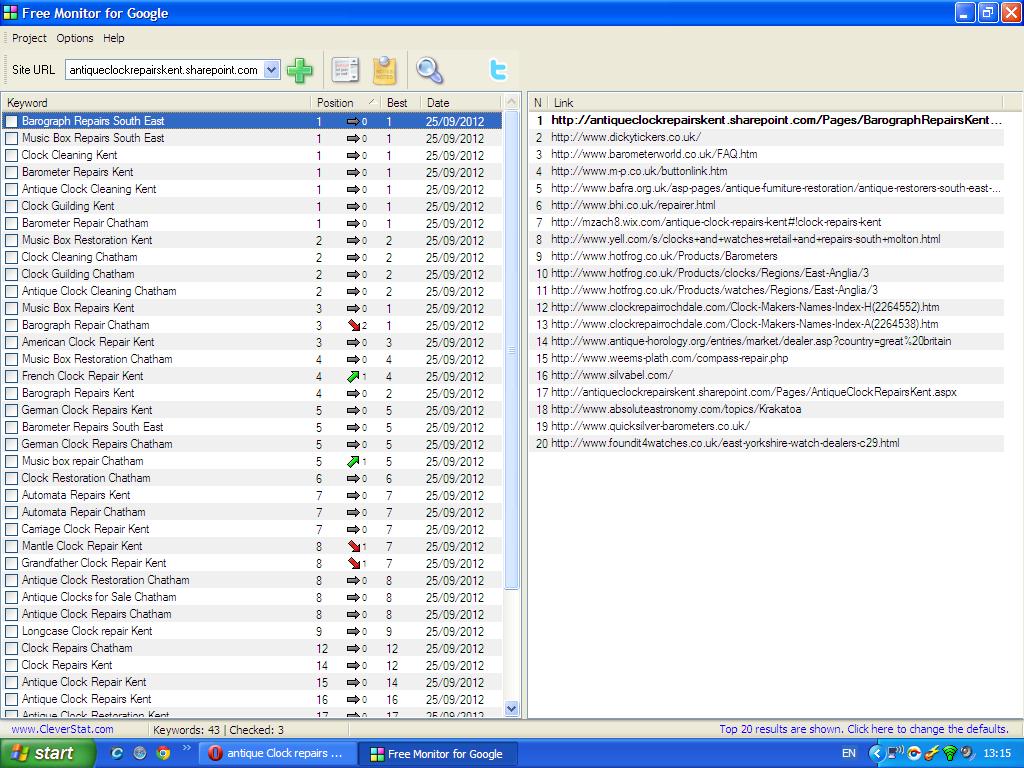
RANKING NO.1 IN GOOGLE

SEO For Driving Schools

The driving school industry is highly competitive because many instructors and schools launch their own websites, often targeting the same local search terms. Most businesses are competing for searches like driving lessons near me, automatic driving lessons, intensive courses, and learner drivers in specific towns or boroughs, which makes it hard to stand out without a clear SEO strategy.

Why Location Matters: Location-based SEO is one of the biggest difficulties for driving schools because search demand changes from area to area. A learner searching in London may look for driving schools near train stations, test centres, or a specific borough, while someone in a smaller town may simply want the nearest instructor available. That means a single page cannot always do the job properly.

There is also the problem of overlapping service areas. Many instructors cover the same neighbourhoods, postcodes, and nearby towns, which creates direct competition for the same keyword space. In practice, this makes local ranking difficult unless the website has strong service pages, clear location relevance, good internal linking, and a trustworthy Google Business Profile.

Driving Schools in South London
Driving Schools in London
Driving School in West London
Driving School in Norwich
​Another challenge is that driving schools are usually very local and very similar in service offer. A driving school in one area may only cover a few postcodes, while another school may cover a wider region, so the website has to be carefully structured around service areas, local intent, and the areas where instructors actually work. If the content is too generic, it will struggle to rank; if it is too repetitive, it can look thin or duplicated.
​

Competition From Independent Instructors

A major feature of this sector is that many instructors set themselves up with their own websites, often with limited time and budget. Some have excellent teaching skills but very basic websites, while others use identical templates and similar wording, which can make it hard for any one business to create a strong online presence.

This means the competition is not just between large driving schools and franchises. It is also between dozens of small independent instructors, all trying to rank for the same few high-intent phrases in the same local market. To succeed, a driving school needs more than a homepage — it needs focused service pages, local relevance, strong trust signals, and content that answers the learner’s real questions.
What Good SEO Needs: For driving schools, good SEO usually means building clear pages for core services, such as manual lessons, automatic lessons, intensive courses, refresher lessons, and test preparation. It also means creating location pages only where they are genuinely useful, so the site does not become bloated or repetitive.

Strong reviews, accurate business details, fast mobile pages, and consistent local listings all matter too. In this industry, the businesses that rank well are usually the ones that look active, trustworthy, and locally relevant both on their website and across the wider web.
Best SEO in South London
SEOLIT Customer & Client Reviews
SEOLIT BEST SEO LONDON
Rated 5/5 based on 30 reviews

SEO
SOCIAL MEDIA
CONSULTANT
PRICES
BLOG
CONTACT
SEOLIT London Location

Location

Call us

CALL

Email Zach Mendelsohn @SEOLIT

EMAIL

SEOLIT RSS FEED
RSS FEED
© Copyright 2026 - SEOLIT London SEM company managed by SEO Consultant Zach Mendelsohn
Sitemap
Powered by Create your own unique website with customizable templates.
  • Home
    • Best Website Optimization Tips
  • Website
    • Charity
    • Choosing the right CMS
    • Choosing a good domain name
    • Examples
    • Weebly Optimization Tips >
      • Collapsible Content
      • Weebly Widgets and Apps
    • Why Bad Links Matter
  • Marketing
    • Online Scams
    • Affiliate Marketing
    • PPC Campaigns
  • Consultant
    • Keywords
    • Link Building
    • SSL Certificates
    • Voice Search
  • Prices
  • FAQs
  • Contact
  • Blog